
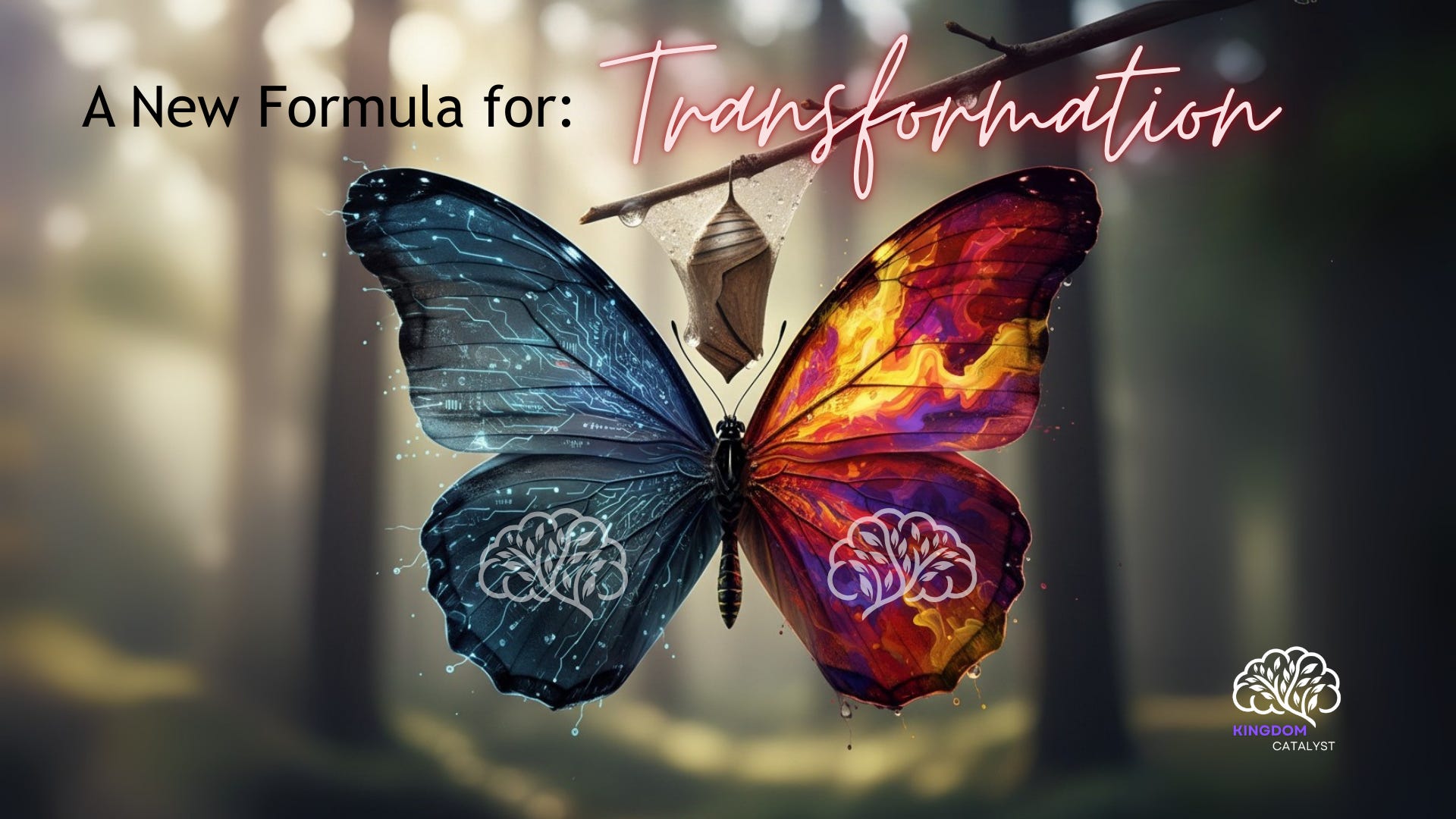
This explainer video covers insights on a new formula for transformation from my University of the Nations master’s program journaling.
Created with NotebookLM
These thoughts are deeply influenced by two highly recommened books:
Rare Leadership: 4 Uncommon Habits For Increasing Trust, Joy, and Engagement in the People You Lead
Transcript:
Have you ever felt like you are just spinning your wheels? You know you're putting in all the work to grow to change, but it just doesn't seem to stick well. If that's you, you're definitely not alone. Today we're gonna dive into a pretty amazing personal journey that might just hold the key. We're talking about a whole new formula for transformation.
One that could totally reframe everything you thought you knew about how we change. This quote right here, it just gets right to the heart of it, doesn't it? That deep frustration so many of us feel. We try harder. We read the books, we make all the right decisions, and somehow we still end up right back where we started.
This shared feeling of disappointment is really our starting point for a game-changing revelation about why real lasting change can feel so out of reach. So let's start by really diagnosing the problem. What if all our efforts are ending in frustration because we're using a completely flawed formula?
I mean, before we can even look for a new solution, we've gotta understand why the old one just isn't cutting it. Okay, look at this. Most of us, and I mean most of us, we live by the equation on the left. If I just have enough information and make better decisions, that should equal transformation. Simple, right?
But it so often doesn't. The breakthrough idea here is that maybe we've been trying to solve the wrong problem entirely. The new formula suggests that true change isn't really about reason. It's about identity and belonging. You see that old formula is basically a left brain approach. It's all about logic and analysis and just good old willpower.
But here's the problem. That approach completely ignores the entire right side of our brain. You know, the side that handles things like our identity, connection, and joy. And as it turns out, that's where all the real power for change is actually hiding. And this brings us to a much deeper question. Where did we even get this flawed performance-based formula from?
Well, a lot of the time it's actually rooted in how we see our relationship with God. We see it more like a contract and less like a covenant. Think about it this way. On one side, you've got a contract. It's transactional. It's all based on performance. If you fail to hold up your end of the bargain game, well the deal's off.
It's an operating system that's completely fueled by fear and obligation. But on the other side, you have a covenant that's a relationship based commitment that basically says, for better or for worse, it's fueled by loyalty and love and that that is transformational. And this, well, this leads to a really profound question.
What if we've been trying to live in a covenant relationship, but we've been using the rules of a transactional contract? What if our entire approach to growth is built on a massive misunderstanding of who God really is? This right here is the core breakthrough. It's a single, incredibly powerful concept that shifts the entire paradigm moving us away from fear and into love, away from contract and into covenant.
The word for it is, has said, now it's a Hebrew term that's really tough to translate with just one English word, but it describes this relentless, stubborn, totally unwinnable, covenant, keeping love. It's the kind of love that doesn't give up on you even when you mess up, even when you break the terms of the agreement.
Listen, this isn't just some nice abstract idea. The Bible is literally filled with examples of Hesed in action. It's God rustling with a messy, deceptive guy like Jacob. It's God asking the prophet Hosea to take back his unfaithful wife just to show how relentless his own love is for his people. And ultimately, it's the simple fact that Christ died for us while we were still failing, not after we finally got our act together.
Now that is Hesed. So if the old contractual model runs on fear and obligation, what fuels this new covenantal one? Well, the answer isn't more willpower or discipline. The surprising fuel for real lasting transformation is joy. The left brain approach, it runs on fear, performance, and obligation. But our right brain, our relational side, it runs on something completely different.
Joy. And look, we're not talking about some superficial smiley face happiness. We're talking about the deep down joy that comes from having a secure identity and a real connection from knowing deep in your bones that you belong. And let's be super clear about what this joy is. As Wilder and Hendricks put it, it's not about pretending pain doesn't exist.
Not at all. It's the very thing that gives us the strength to endure the pain. It's the powerful, resilient force that is so much more motivating than fear could ever hope to be. This connects directly to a whole new way of defining maturity. It's not about having all the answers or never making a mistake.
Real emotional maturity is simply the capacity to endure hardship. Well, it's about what happens when things go wrong. So how do we do this? Well, this brings us to this really practical framework called rare leadership. When a crisis hits and our fear-driven left brain wants to totally take over, these are the skills we need.
Can we remain relational instead of shutting down? Can we act like our true selves instead of just reacting? Can we return to joy as our fuel? When we can do those things, we're able to endure hardship well. So this whole paradigm shift, it does way more than just change our methods for personal growth.
It completely reframes the goal of our entire lives. Gender reflects on this really sobering reality in his journals. I mean, think about Solomon. The guy was given a mega download of wisdom directly from God. He had more knowledge, more insight than anyone, and yet he didn't finish well. He got taken down by the classic pitfalls, money, sex, and power.
So if he couldn't do it, what hope is there for any of us? This just proves that knowledge isn't the answer and neither is influence or success. When you look at these stories both from long ago and from today, you really have to ask yourself, have we been chasing the wrong things this whole time? So maybe the ultimate goal isn't to be influential or rich or successful in the eyes of the world.
Maybe the true measure of a life is just to finish the race with our love and our character intact. I mean, what would change for you if that became your primary goal?